Browse 110+ Media and Streaming Appliances on the NetActuate Media Marketplace
Explore


Browse 110+ Media and Streaming Appliances on the NetActuate Media Marketplace

By clicking "Accept all" you allow cookies that improve your experience on our site, help us analyze site performance and usage, and enable us to show relevant marketing content. You can manage cookie settings below. By clicking “Confirm selection” you agree with the current settings.


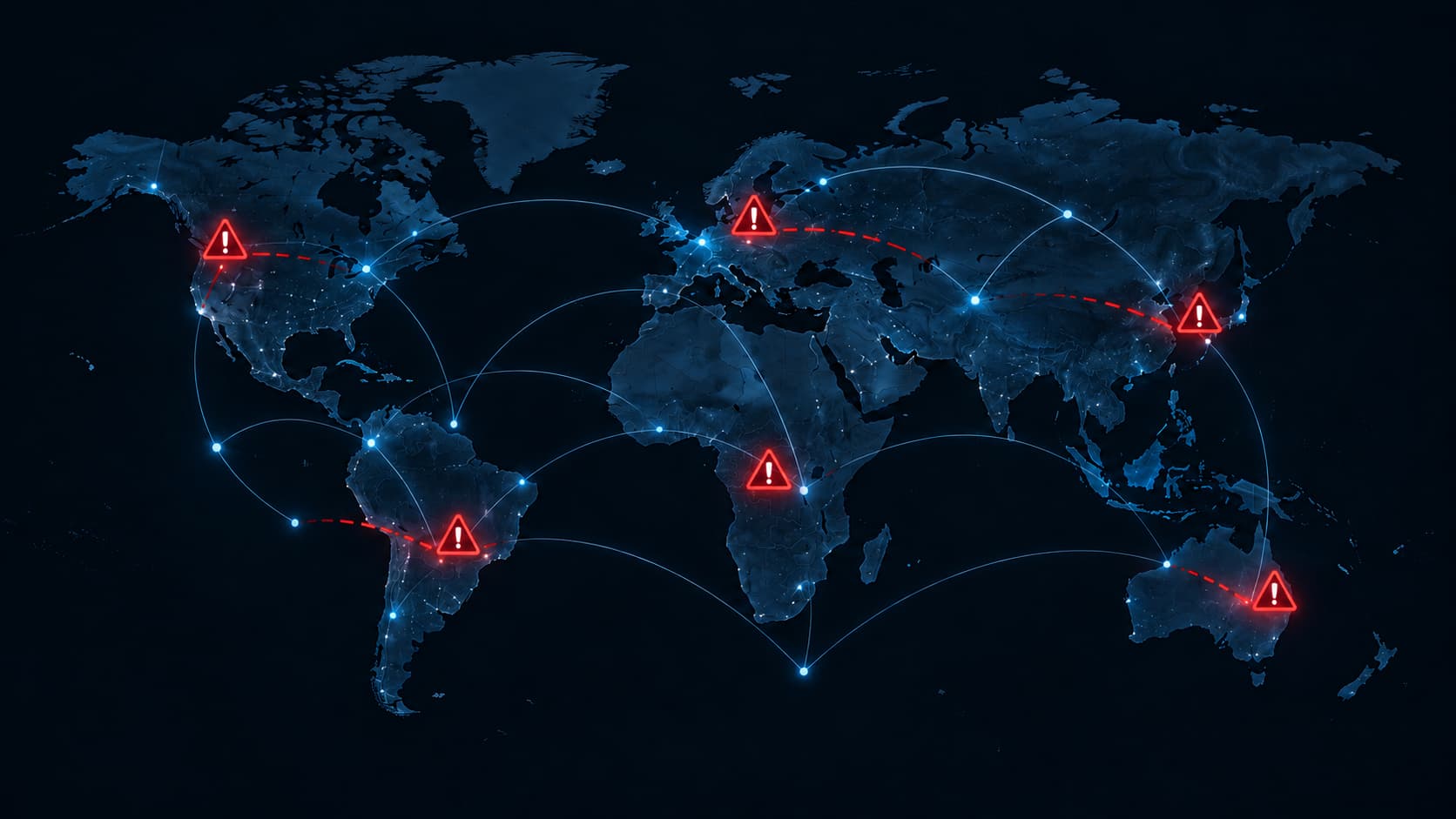
Most of us think of an IP address as a place: one server, in one rack, in one building. Anycast breaks that assumption. With BGP Anycast, a single IP address can be served from dozens or even hundreds of locations at once, and the internet's own routing system decides which one each user reaches.
That idea is the foundation layer in Designing for Platform Resilience in an Unpredictable World, the whitepaper we wrote with the NS1 team at IBM. Here's how it works and what it takes to run it well.
Every participating point of presence (POP) announces the identical IP prefix to its upstream providers and peers using the Border Gateway Protocol (BGP), the protocol that governs routing between networks across the internet. Routers then run their normal BGP decision process to pick the best path to that prefix, which usually means the topologically closest or lowest-cost location.
Because Anycast relies on the same standards that underpin the internet, its behavior is well understood and predictable. You aren't depending on a proprietary control plane, which also helps you avoid vendor lock-in.
This is where Anycast earns its place in a resilience strategy. If connectivity to a region degrades because of a fiber cut, a transit provider failure, or a local infrastructure problem, routes to that site disappear and traffic shifts to the next best location automatically. Operators can also withdraw a location on purpose for maintenance or during an incident, and traffic flows cleanly elsewhere.
We saw this firsthand during the April 2025 Iberian blackout, when traffic bound for Madrid was rerouted to Paris and London with no manual intervention.
Users never see any of this. They connect to one IP address or hostname, while dozens or hundreds of instances sit behind it. Public DNS resolvers like Quad9's 9.9.9.9 and Cloudflare's 1.1.1.1 work exactly this way, as do the DNS root servers.
And Anycast isn't just a CDN thing. Security platforms, cloud load balancers, DNS providers, and edge applications all use Anycast as the Layer 3 entry point to a much larger distributed system.
Anycast looks simple from the outside, but successful deployments depend on careful practice. Prefix ownership, autonomous system numbers (ASNs), routing policy, and route validation through RPKI all determine whether your announcements are trusted and propagate consistently. Teams should also measure convergence behavior, test full regional withdrawals, and leave enough headroom so a failover doesn't overload the healthy sites that absorb it.
Because Anycast sends users to the nearest available instance rather than a specific backend, requests can arrive anywhere. Applications need to be stateless or safely replicated, with patterns like replicated data stores and distributed caching, and they should tolerate asymmetric routing.
Anycast keeps traffic reaching a viable entry point. It doesn't decide which endpoint is best for a given user or business rule. That's the job of authoritative DNS and traffic steering, which we'll cover next in this series.
Read the full whitepaper, free and ungated, including a practical SRE checklist for multi-layer resilience.